The Oremus challenge
A blend of history and traditions
The domain ofOremushas beencreated in 1993by theAlvarez family, also owner of the famousVega Sicilia of Spain.The vineyard is located in theTokaj area, at Tolcsva, on a mountain range northeast of theHungaryThe region has been recognized by the UNESCO World Heritage Committee since 2002 for itsexceptional winemaking conditions.The winemaking family then uses all its expertise and the advantages of the terroir to produceTokaj winesremarkable. These sweet wines haveover 400 years of historyLouis XIV himself is said to have described Tokaj as the “wine of kings and king of wines.” The underground cellars, dating back to the 13th century, have been preserved. In 1999, a new winery was built with the utmost respect for the traditions of this iconic wine of the region. To this end,Pablo AlvarezHe has surrounded himself with a team of local professionals who work meticulously to produce these wines, which have long been highly sought after in Europe. The Oremus estate is therefore a challenge that this brilliant winemaker has been successfully tackling for almost 30 years.
The Oremus vineyard
An exceptional and symbolic terroir
It is from theOremus vineyardthat was producedthe first wine of Tokajin 1630. The great reputation of this wine has therefore led to the estate's 115 hectares of vineyardsa historical symbolThe city ofTokajIt is located on the banks of the Bodrog River, in the foothills of the Zemplén mountain range. The grapes benefit from the region's continental climate. Indeed, the sometimes extreme weather conditions promote the development of aromas in the different grape varieties. Heavy winter snows protect the vines from freezing temperatures and strong winds. Summers are hot, and temperatures rise sharply from May onwards. Autumn, with its higher humidity, is ideal for the formation of thenoble rot, an essential fungus forsweet wines of Tokaj.
At the estate ofOremusSix varieties of grapes are cultivated:
- Furmint, which represents half of the vineyard,
- Sarga muskotaly, which is actually the yellow muscat,
- the harslevelu grape, from which the wine derives its sweetness and floral aromas,
- zeta, which brings strength and vigor to Oremus's vintages.
- Two old traditional grape varieties are also present, kövérszolo and goher, planted on a small area of the estate.
Oremus wines
Between tradition and innovation
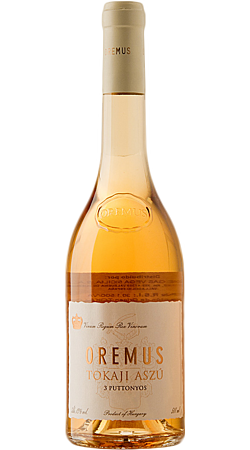
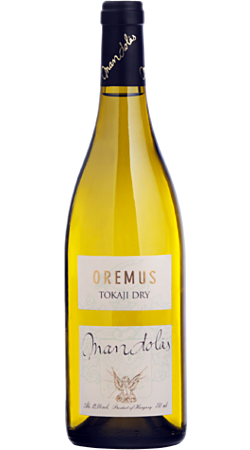
Pablo Alvarezplaces great importance on respectingthe tradition of Tokaj wineand ensures that the winemaking ofOremus winesfollow theancestral practicesFour wines are produced at Oremus. The Oremus Vendimia Tardia is made from half noble grapes. A slow fermentation takes place, and then the wine rests for six months in wooden barrels in the estate's underground cellars. Oremus Vendimia Tardia has beautiful floral notes that are balanced by the gentle acidity of the Furmint grapes. The Oremus Mandolas is made from 100% Furmint grapes; it is adry white,unusual for the regionWhile Pablo Alvarez respects the local winemaking tradition, he has also been able to...think outside the boxand pave the way for dry white wines in a region renowned for its sweet wines. Oremus Aszu is produced from noble grapes and requires meticulous attention to detail. This cuvée is aged for two to three years, then the wine matures for one year in the bottle before being released. Finally, the Oremus Eszencia cuvée is unique and produced only in exceptional vintages. Its sugar content is so high that the alcohol level does not exceed 3%. It is a great sweet wine that can easily be cellared for several decades.